
Kiosk RFQ Writing for Cash-Handling and Payment Modules: What to Specify Before You Request a Quote

Kiosk RFQ writing for cash-handling and payment modules means deciding cash-accepting vs cashless before you list a single module, then stating each module’s capacity, interface, mounting and compliance ask in the RFQ. That decision drives enclosure security, module count and total cost of ownership, so it belongs in the quote request, not in the RFP that follows.
Why payment module scope decides your kiosk quote
Payment scope is where kiosk quotes diverge most, because accepting cash multiplies the mechanical modules a manufacturer must build, wire and warrant. Two vendors can price the same terminal at materially different figures simply because one assumed a card reader and the other budgeted a bill validator, coin mechanism, recycler and safe.
What this guide gives you: a cash-accepting vs cashless RFQ scope split you can paste into a clause list, and a pre-quote complexity register that tells you what to state now, defer to sample stage, or leave to the integrator. Both exist so vendor quotes land on comparable ground.
Bespoke terminal procurement sits inside a broader [1] discipline: requirements first, quotation second, production third. Payment modules are the part of that sequence buyers most often under-specify.
RFI vs RFQ vs RFP: which document asks for payment scope
An RFI gathers market information, an RFQ focuses primarily on pricing, and an RFP evaluates complete solutions including technical capabilities, support, experience and total cost of ownership ([2]). Payment complexity therefore has to be surfaced at RFQ stage, because that is the document vendors price against.
| Document | What it asks | Payment module coverage |
|---|---|---|
| RFI | Market information and vendor capability | Names payment methods you are considering; no module detail, no pricing |
| RFQ | Pricing against a defined scope | Must state the payment method set, module list, cash storage and security rating |
| RFP | Complete solution, support and lifecycle | Covers payment integration, PCI compliance, warranty and total cost of ownership |
Deferring module scope to the RFP is the most common sequencing error. By then a vendor has already anchored a price on assumptions, and every clarification after that anchor reads as a change order rather than a scope statement. A kiosk quote request checklist should carry the payment clauses in whichever document is asking for money.
Cash vs cashless kiosk cost complexity: the split your RFQ must state
A cashless unit runs electronic modules only—EMV reader, NFC antenna, QR scanner, PIN pad—while a cash-accepting kiosk adds mechanical currency handling with higher failure rates and higher maintenance cost. The split below is the clause-level reference for your kiosk RFQ payment module requirements.
| Dimension | Cash-accepting | Cashless |
|---|---|---|
| Payment methods | Banknotes, coins, cards, NFC, QR code | EMV chip/contactless, NFC, QR code, mobile wallets |
| Core hardware | Bill validator, coin acceptor, cash recycler, secure cashbox, audit trail module | EMV reader, NFC antenna, QR scanner, PIN pad, payment gateway |
| Hardware complexity | High—mechanical plus electronic | Low to medium—primarily electronic |
| Failure rate | Higher—bill jams, coin jams, worn rollers, sensor contamination | Lower—card reader or connectivity issues |
| Maintenance cost | $3,000+ annually | Typically under $1,000 annually |
A cash-accepting payment kiosk typically costs 40-70% more than an equivalent cashless unit because of the bill validator, coin mechanism, recycler and secure cashbox, and installation adds physical cash logistics—secure transport, vaulting and insurance ([3]). Treat these figures as indicative industry comparison data, not fixed prices: re-verify with your vendors for the specific module set and region.
Failure cost deserves its own line in the budget. Cash-handling modules are the most frequent source of field service calls, and per-incident repair costs run from $50 to $400, with coin mechanism cleaning and repair alone at $40-$100 ([3]). That range is a planning input for service coverage, not a warranty claim.
Core cash-handling modules to itemise in the RFQ
A cash-accepting terminal must handle the full cash lifecycle: note and coin validation, counterfeit detection, change dispensing, secure storage and audit trail generation ([3]). Itemise each module and state four things per line: capacity, interface, mounting, and the compliance ask.
- Bill validator / note acceptor — state accepted note set, stacker capacity, bezel type and interface (USB, ccTalk or serial), plus counterfeit-detection standard.
- Coin acceptor or hopper — state coin set, hopper capacity for change dispensing, and jam-recovery access point.
- Cash recycler — required only if the kiosk returns notes as change; state recycling denominations and float target.
- Secure cashbox — state safe steel thickness and vault rating; bill payment and cash-handling kiosks mandate high-security safe boxes to UL/CEN-style ratings, with the exact rating confirmed by the manufacturer for the chosen module ([1]).
- Cash audit trail module — state logging format, retention period and how it reconciles with your back office.
- Anti-skimming EMV reader — state mounting bracket and PCI-PTS compliance expectation; PCI-PTS and EMV are the recognised payment-security frameworks, and certification is per module, not per enclosure.
- NFC antenna — state tap zone position, read distance and shielding against the enclosure.
- Thermal receipt printer — state paper width (58mm or 80mm), roll diameter and jam-free exit design.
Self-service kiosk peripheral module list for the RFQ
The table below is the specifier’s version of a self-service kiosk peripheral module list: each row names the module, what the RFQ should state, and the integration consideration the vendor will price against.
| Module | State in the RFQ | Integration consideration vendors price |
|---|---|---|
| Thermal receipt printer | Paper width 58mm/80mm, roll diameter, auto-cutter | Jam-free exit design and roll access for field staff |
| Barcode / QR scanner | Fixed-mount 1D/2D, illumination, scan speed | Mount angle and ambient light at the mounting position |
| Payment device | EMV bracket spec, NFC, PIN pad requirement | PCI-PTS compliance and physical mounting bracket |
| Cash modules | Acceptor/dispenser capacity, safe steel thickness 1.5–3.0mm | Vault access, note path routing, service clearance |
| Camera | Wide-angle HD USB or biometric, lens position | Lighting bezel and privacy compliance |
| Compute engine and OS | Windows (Intel Core i3/i5/i7) or Android (RK3288/RK3399/RK3568/RK3588) | Payment SDK availability and OS support lifecycle |
| Enclosure | RAL colour code, mount type, branding | Module cut-outs and peripheral integration standards |
Source: [1]. Windows-on-Intel versus Android-on-RK is not a cosmetic choice—it shapes which OEM kiosk payment module specification, drivers and SDKs a vendor can support. That core cash module list should be locked as part of the OEM/ODM scoping sequence, before enclosure detail is finalised.
Cash handling kiosk RFQ requirements: state, defer, or leave to the integrator
Classify every requirement against a three-way rule to turn ambiguity into quotable scope. Items left unstated get priced as risk, which is why post-quote change orders appear.
State now in the RFQ
- Safe steel thickness and cashbox capacity—drives enclosure volume and cost.
- Payment method set: cash, card, NFC, QR, and whether change is dispensed.
- Accepted note and coin denominations, and the counterfeit-detection standard.
- Interface type for each payment module (USB, ccTalk, serial, Ethernet).
Defer to sample stage
- Final enclosure colour, RAL code and branding artwork.
- Exact module positions within the bezel.
- Sample vs mass production quantity confirmation—typically 1–5 units for evaluation versus 100+ for production ([1]).
Leave to the integrator
- Payment gateway software and acquirer certification.
- Cash-in-transit logistics and vaulting arrangements.
- Per-site acceptance testing of the Kiosk RFQ Writing for Cash-Handling and Payment Modules scope.
This is also where project-based configuration is quantified rather than assumed: more configuration, more lead time, more total cost of ownership.
Support, spare parts and lifecycle clauses to request with the quote
Cash-handling modules fail more often than display or compute components, so support terms are part of the payment quote, not an afterthought. Request these clauses with the quotation so the custom kiosk hardware manufacturing quote is comparable across vendors.
- Spare parts availability: named modules, stock location, order lead time.
- SLA response times: remote triage window versus on-site visit window.
- Remote device monitoring: what telemetry the vendor exposes, and whether cash module faults are reported.
- Operating system support lifecycle: Windows or Android version support horizon and upgrade path ([2]).
Most kiosk procurement projects run 60 to 180 days from requirements gathering through vendor selection, depending on complexity and public-sector procurement rules ([2]). Cash complexity pushes toward the long end; publish the timeline in the RFQ so vendors price service, not urgency.
Getting comparable quotes: what to do next
Decide cash versus cashless before writing the module list. That single sequencing rule is what makes vendor quotes comparable, because it fixes whether the enclosure must hold a safe and whether cash logistics appear in the total cost of ownership.
Use the two artifacts from this guide: the cash-accepting vs cashless scope split table, and the three-column complexity register. Together they let you write kiosk RFQ payment module requirements that vendors can price line by line instead of absorbing ambiguity into a risk premium.
Next in the series: apply the same clause discipline to other component decisions, including RFQ clauses for laptop replacement and related terminal refreshes and RFQ memory price adjustment and quote. For projects where a segment split reshapes the requirement set, RFQ clause templates re-drafted for the segment split shows how to re-draft rather than renegotiate, and RFQ clauses for premium-only 2026 tablet skews covers the display-side equivalent.
Content reviewed: 2026-09-13.
Evidence confidence
Confidence: Medium. This rating reflects cross-checking 3 sources across 3 independent domains. It measures evidence coverage, not certainty; verify safety-critical work against manufacturer instructions and local requirements.
References
APA 7th edition
- ↑Cited 4 timesSeelinkin. (2026). Custom Kiosk Hardware Manufacturing in China Guide. https://www.seelinkin.com/custom-kiosk-hardware-manufacturing-guide/.
- ↑Cited 3 timesSelf-Service Request for Proposal Resources. (n.d.). Kiosk RFP Guide. Retrieved September 13, 2026, from https://kioskindustry.org/news/kiosk-rfp.
- ↑Cited 3 timesQtenboard. (n.d.). Cash vs Cashless Payment Kiosk: B2B Technical Selection. Retrieved September 13, 2026, from https://www.qtenboard.com/factory-news-658.html.
You should also read:

Memory Price Adjustment Clause Template (2026): Allocation, Minimum-Buy and Re-Quote Triggers
A memory price adjustment clause template defines how DRAM/NAND cost moves are shared between buyer and supplier before a quote goes stale. For 2026 multi-batch buyers, the base index formula alone fails when allocation cuts supply. You need a clause pair that adds allocation, minimum-buy,…
Continue reading...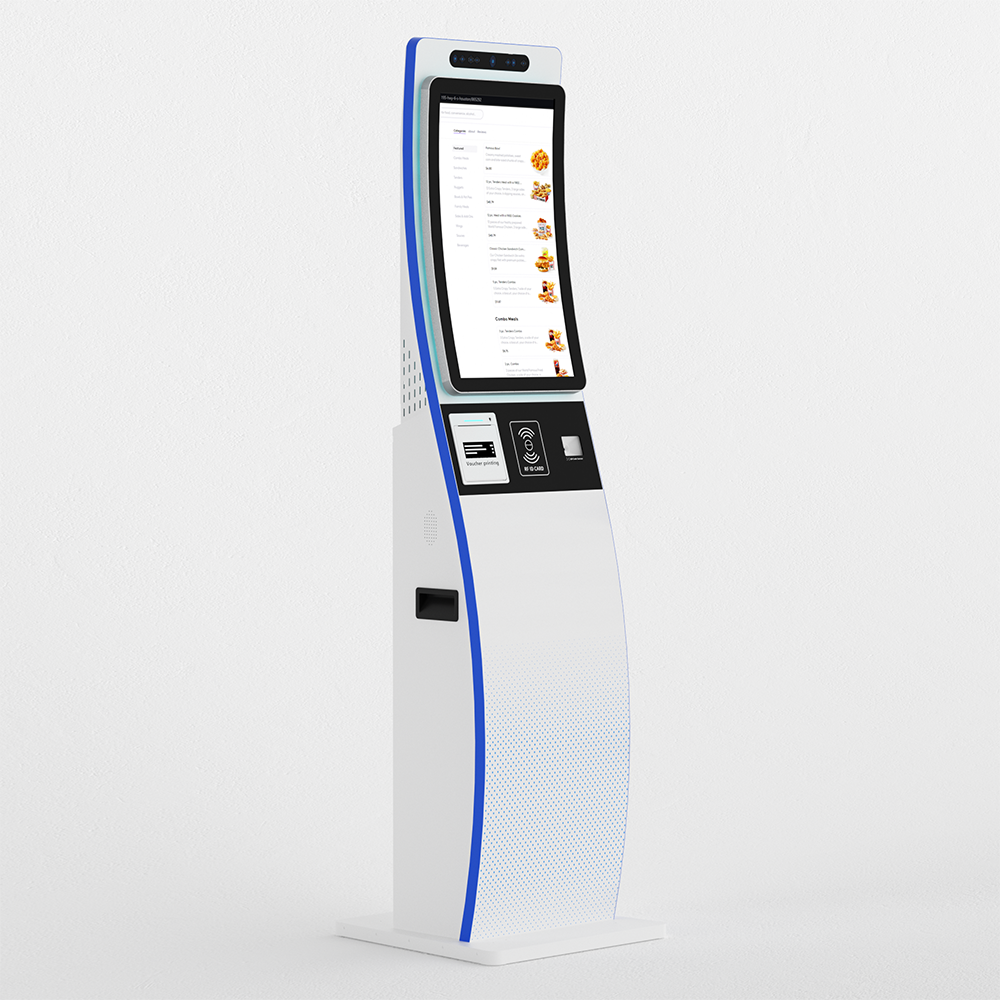
RFQ Clause Template for PoE Fed: Touch, Brightness, and Duty Terms in Writing
Rfq Clause Template For Poe Fed is the decision framework examined in this guide. The sections below turn sourced evidence into practical comparison criteria without overstating what the available research can prove. A single RFQ clause template can compare bids for a mixed fleet of…
Continue reading...
RFQ Clauses for Custom Android POS Tablets: Memory, Battery, Connector and Touch Terms to Put in Writing
Rfq Clauses For Custom Android Pos Tablet is the decision framework examined in this guide. The sections below turn sourced evidence into practical comparison criteria without overstating what the available research can prove. The RFQ clauses for a custom Android POS tablet that matter most…
Continue reading...